What the bicycle for the mind really means
The personal computer made us faster without making us passengers. The question is whether AI will do the same, or whether the sparkly prompt box is just too convenient to resist.

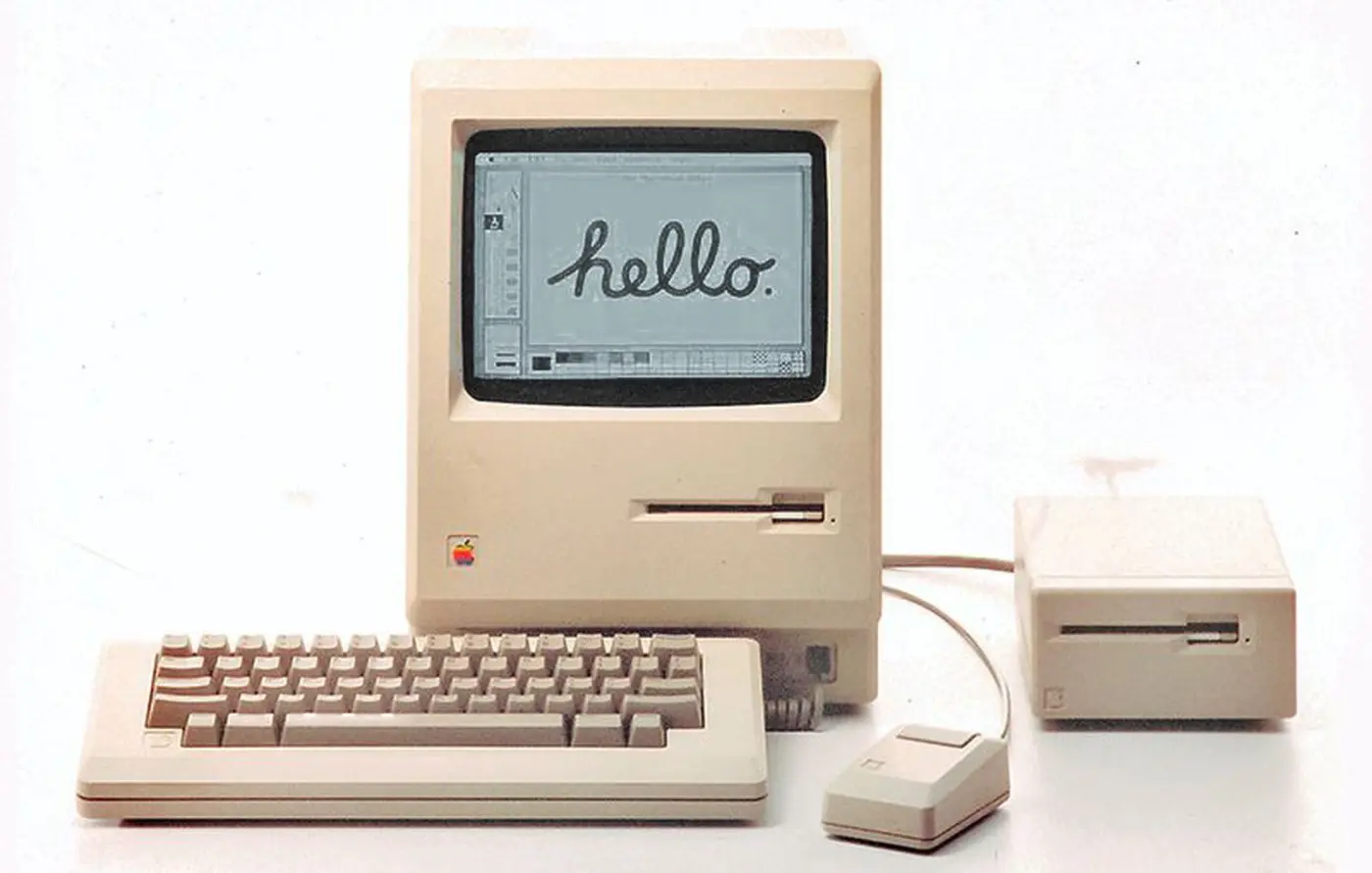
If a personal computer is, as Steve Jobs famously described it, a bicycle for the mind, then surely an AI is a motorcycle for the mind. Right?
I think the truth is both yes and no, frustratingly so as opinions on the technology become increasingly binary. AI enthusiasts exalt the material progress that's on offer at the expense of everything else, and those that hate it are blindly dismissive of anything it creates.
It's clear that the visceral hatred of AI that many hold centres mostly around its application to creative pursuits. Yes, there is understandable anxiety about what employment looks like in an agentic world, but at a deeper level, no one really cares that an AI is generating project plans and business requirements documents. The thing that really cuts is when it does stuff that seemingly competes with us for the self-actualised joy of creation. That stuff, surely, is reserved for humans.
Did we feel the same way about the original 'bicycle for the mind' though? I'm too young to describe first-hand how the world changed when a personal computer ended up on every desk in every home. Through vicarious recounts, similar anxieties about the shifting job market existed, but this fear about the loss of humanity simply wasn't there. This is despite the fact that personal computers had a similarly large impact on creative pursuits.
The most identifiable difference in the two technologies is that personal computers, despite their efficiencies, still force a lot of agency. It makes us faster, but we still have to pedal the bike, guide the handlebar, and ding obnoxiously at the ones who stand in our way.
My favourite example of the bicycle for the mind is Garageband. Countless people with nothing more than a Macbook and a microphone now able to create and distribute music, without the need for industry connections or access to recording studios at hundreds of dollars an hour. 'Nothing more than a Macbook' is an oversimpification though. It's still BYO creativity. Garageband doesn't give you that, it just gives you the tools.

The Garageband generation also didn't really compete in the same space as traditional musicians. A lot of it ended up in a whole new genre: bedroom pop. A classical guitarist and an orchestral musician needn't feel threatened that an army of Gen Z-ers with stickered Macbooks are coming for their turf. The Gen Z-ers just made their own thing, a new thing completely native to the tools they used.
Today, we have new music tools available with generative AI. We have new everything tools available with generative AI. Most of them are glowing, sparkly textboxes that say something along the lines of "Describe what you want to create". Is this really what we've reduced the creative process down to? That sparkly box makes us lazy, it makes us passengers on the bicycle. As with most things in life, what you get out is a function of what you put in, and if all we're putting in is a description of what we want, then of course the technology will borrow more than it creates. No wonder we're so anxious, we're all facing a reckoning of whether anybody cares at all whether something is created or merely borrowed.
Fortunately, it really does seem that humanity has appreciation for original creation. We can tell when a song is a mere product of a prompt, and we dismiss it. Meta and OpenAI tried to make AI content social media a thing, and watched it fall flat on its face. Having an AI generate something from a mere sentence is a real dopamine hit, largely for the fact that the feedback loop for having things made is so short now. It's fun for riffing. But it's fun for yourself, as your own consumer. The truth is, you don't care about anyone else's AI outputs anymore than they care about yours.
So, AI can be a bicycle for the mind, in some ways. Like the personal computer, it will unlock new genres of stuff that weren't possible before. But unlike the personal computer, it has much greater scope to tempt us into becoming mere passengers. Humanity's reverence for the creations of its own though is its greatest defence, we simply expect more from each other.
Serious software engineers, whose work requires true systems thinking, insight, and directional conviction, will be enhanced but not replaced by AI. But a new genre of DIY software will emerge, from people who use the tools to build things they love that solve the problems they see. In the last two weeks, I've seen my fiancee, an urban planner by training and practice, create an app to help us plan our wedding. She has neither the skills nor the desire to become a software engineer and remains wholly unqualified to compete with the trade. And yet, here is a new genre of software that exists only because of the new tools available to her.
Need we fear? In some ways, everything competes with everything because there's only 16 waking hours in the day for us to care about things. Time spent listening to bedroom-pop is time not spent listening to a 6-piece rock band. Work done by individuals creating DIY software is work not done by trained software engineers. But that is simply how the world changes. We can't invent more hours in the day but the balance of things we pay attention to evolves constantly; perhaps we just listen to more music and use more software because there's simply more of it.
The luddites are rightly criticised because they feared change. But I think today more than ever, we can empathise with the luddites because this particular change feels threatening not to our incumbent skills, but to our agency. The bicycle for the mind is an accelerator, it allows us to do more with our agency. Conversely, today's AI tools far too often tempt us to delegate our agency. Many of us will be tempted, but we'll always have the most time for those among us who choose to ride the bicycle ourselves.